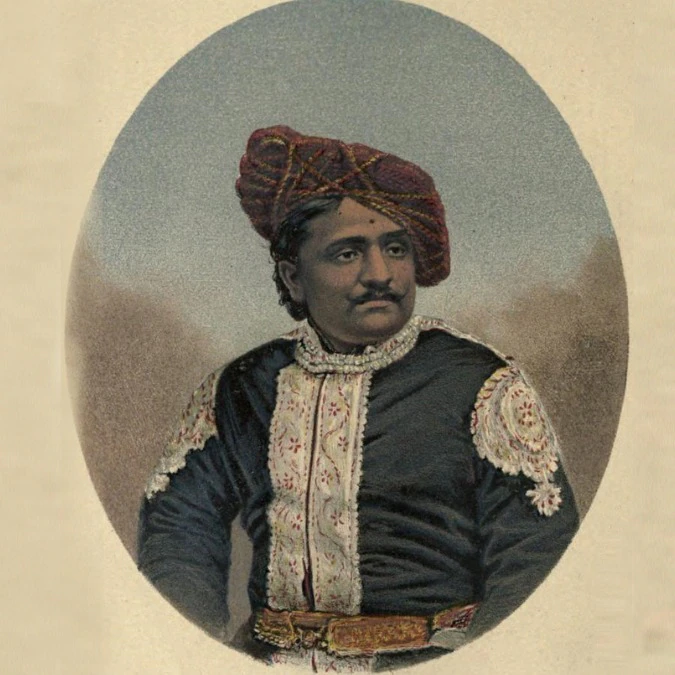
Know Almost Chhatrapati Rajaram Maharaj
Early Life and Background
Chhatrapati Rajaram Maharaj was the youngest child of the awesome Maratha author, Chhatrapati Shivaji Maharaj. He was born in 1661 at Fortification Raigad. Rajaram developed up amid a turbulent period in Maratha history, encompassed by political interest and steady strife with the Mughal Empire. In spite of the fact that not known fundamentally as a warrior, he had sharp political understanding and a calm, congenial nature that earned him dependability among his followers.
Crisis After Sambhaji Maharaj’s Death
After the execution of his senior half-brother, Chhatrapati Sambhaji Maharaj, by Mughal head Aurangzeb in 1689, the Maratha kingdom confronted an extreme authority emergency. At that time, Rajaram was under house arrest due to inner royal residence clashes. Sambhaji’s dowager, Yesubai, had her newborn child child Shahu, delegated as lord and requested Rajaram’s discharge, designating him as official to keep up stability.
However, the circumstance was compounded when a backstabber, Suryaji Pisal, surrendered Fortification Raigad to the Mughals along with Ruler Yesubai and youthful Shahu. To avoid a control vacuum and secure Maratha sway, senior priests and commanders pronounced Rajaram Maharaj as the following Chhatrapati in 1689.
Reign and Authority Style
Rajaram Maharaj was known for his adaptable, obliging, and delicate identity. Even though he did not lead fights by and by like his father or brother, he promoted solidarity and certainty among Maratha leaders. His rule stamped one of the strongest stages of resistance against Mughal extension in the Deccan.
Resistance Against the Mughals
The Maratha battle amid Rajaram’s run the show was carried forward by brilliant commanders such as Santaji Ghorpade and Dhanaji Jadhav. Beneath their administration, the Marathas carried out brave assaults, vanquished Mughal officers, recovered fortifications, and indeed attacked Aurangzeb’s camp. A few imperative triumphs were accomplished over Maharashtra and Karnataka, keeping Mughal strengths beneath consistent pressure.
Escape to Jinji and Proceeded Struggle
Facing tireless Mughal assaults, Rajaram Maharaj made a key elude to Jinji Fortification in present-day Tamil Nadu in 1689. From there, he proceeded to direct Maratha resistance for about a decade. Indeed, after the drop of Jinji in 1698, he effectively sidestepped Mughal strengths and returned to Maharashtra, demonstrating his flexibility and determination.
Family and Individual Life.
Rajaram Maharaj had numerous spouses, including Jankibai, Tarabai, and Rajabai. Among them, Tarabai afterward played a significant part in Maratha history. Rajaram cleared out behind two children and a girl. His ancestry proceeded to impact Maratha legislative issues indeed after his death.
Death and Legacy
Chhatrapati Rajaram Maharaj passed absent in 1700 due to an ailment at Post Sinhagad, close to Pune. In spite of his brief rule, his administration guaranteed the survival of the Maratha Domain amid its most helpless stage. After his passing, Tarabai took charge of the Maratha strengths and carried forward the resistance against Aurangzeb.
Rajaram Maharaj’s bequest lies in his capacity to hold the Maratha state together amid an emergency, demonstrating that quality in administration is not as it were seen on the battlefield but also through strength, solidarity, and key vision.